In a notary office design or redesign project, two dimensions coexist: on the one hand, offering clients a welcoming environment that inspires confidence; on the other hand, creating a workplace that is both comfortable and efficient so that employees’ energies can be fully expressed. The challenges are numerous: materials, aesthetics, decoration, atmosphere…
How to create this space and how to rethink a notary office where employees enjoy coming to work?
Jbonet has been supporting notary offices in their design projects for many years, providing experienced project managers, as well as a design office, not to mention a range of major furniture design brands such as Archiutti, Vitra, Bene, Fantoni, and many others.
Between tradition and modernity, the notary office must embrace the profession’s history while remaining at the forefront of design and equipment, and we reveal here 4 tips to follow.
Ensuring confidentiality within the notary office design
Just like lawyers or doctors, notaries have a duty of confidentiality. They are bound by “general and absolute secrecy,” as specified in Articles 3.4 and 20 of the National Notaries Regulation. The office design must therefore meet this requirement, particularly by enhancing sound insulation.
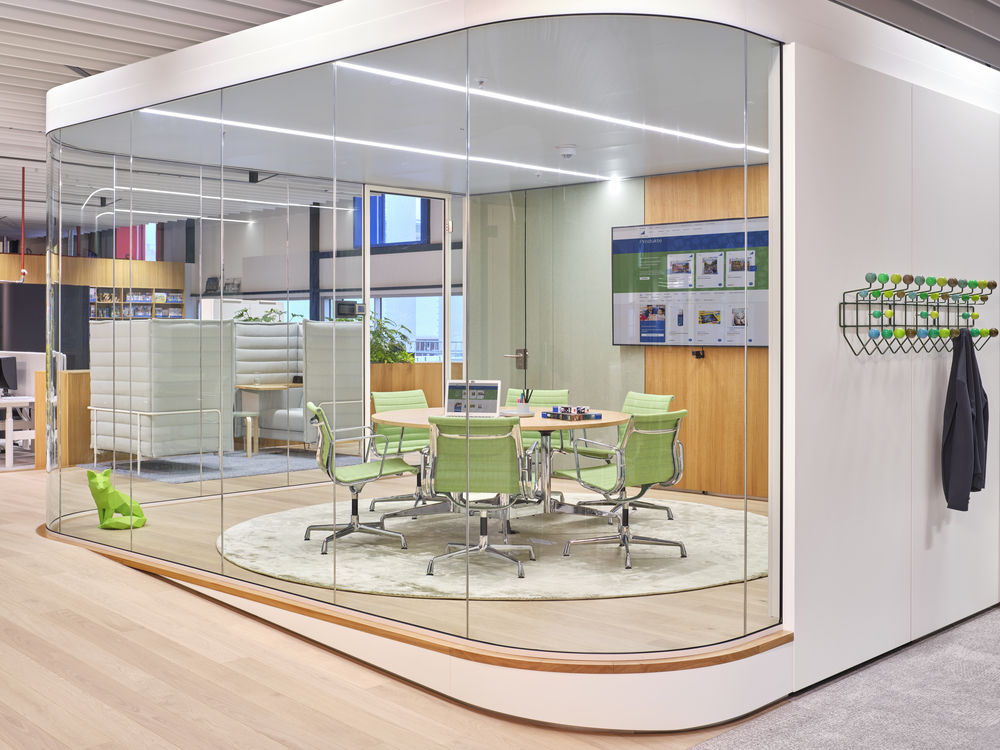
Furthermore, although notaries now allow clients to prepare for their appointments in advance via various online platforms that help understand the ins and outs of the case, these cannot replace an in-person meeting. The conversations held within a notary office require an environment conducive to confidentiality. To achieve this, it is important first to partition these spaces. Indeed, partitions and the view of enclosed spaces will reassure the client about the dissemination of information shared during the exchange between the notary and their client. Secondly, acoustics must be addressed. Ensuring the soundproofing of these confined spaces is necessary so that the client understands they can communicate with complete peace of mind.
Ensuring client peace of mind
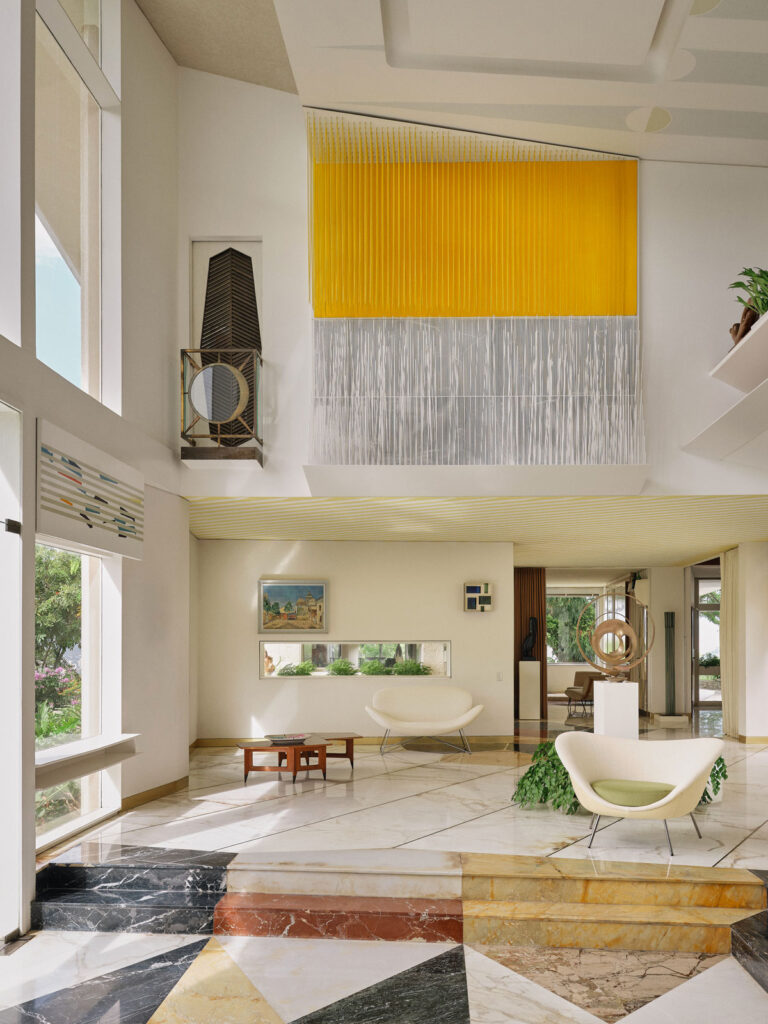
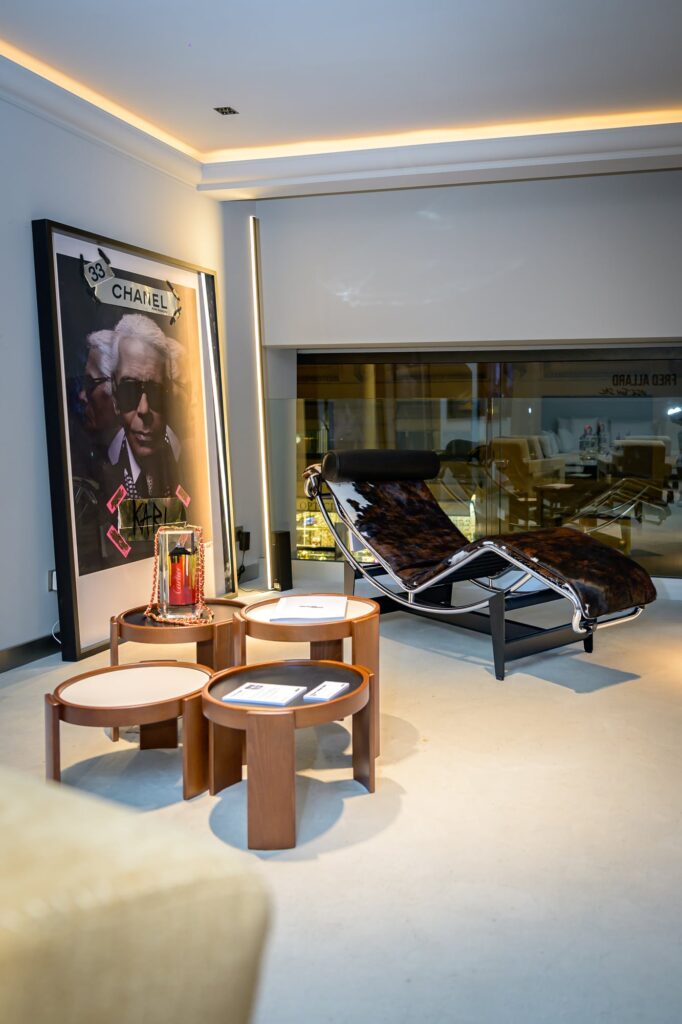
The notary office design must also meet clients’ needs for comfort and peace of mind. Since signing a deed can be a source of stress and uncertainty, it is important to reassure them, particularly through the choice of decoration and furnishings, combining tradition and modernity. For example, in signing rooms, you can favor noble materials such as solid wood for furniture, which convey a reassuring and calming atmosphere. The color scheme of these rooms is essential. Colors such as white and gray that pair well with wood will create calm and softness. Consider favoring neutral tones that are nonetheless warm in order to highlight the furniture, lighting fixtures, and artwork. You can bring out the whole with a few touches of brighter colors such as blue, orange, yellow… For the choice of decoration, artworks and sculptures will have a beautiful effect.
Technology earns its place
The notary office design also takes into account the rise of digital technology in the profession. While storage spaces take up less room thanks to MICEN (Electronic Central Registry of Notaries of France), the layout now incorporates new tools that guarantee productivity and practicality. These include large screens, video projectors, connected tables, laptops, REAL3 keys, and dual work monitors. However, it remains important to keep printed copies of files and to have storage space that offers clarity and readability of information. To this end, new storage furniture allows furniture to become an integral part of the design. Secondly, when designing workspaces, it is important to assess the physical and psychological needs of your employees.
Jbonet supports numerous notaries in France in their design or redesign projects, and we know how much discretion, confidentiality, and brand image matter. Do not hesitate to contact one of our project managers to assist you with your project.