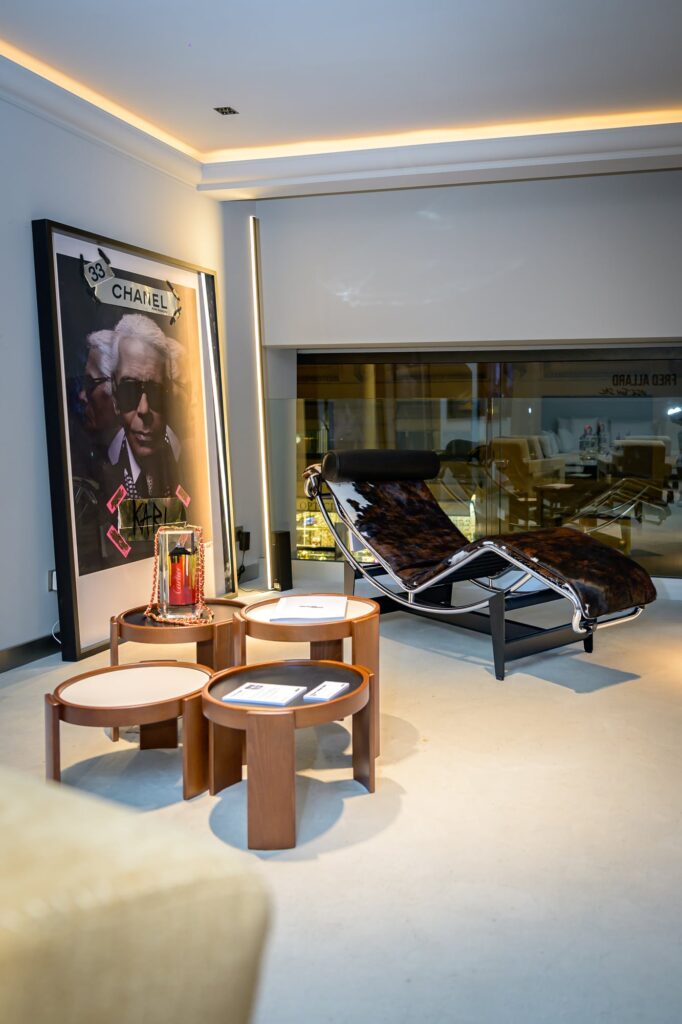
Here is an icon of contemporary design furniture, a major piece currently marketed by the Italian manufacturer Cassina: the LC4 chaise longue. This piece is indeed recognizable among all other design chaises longues due to its design and long silhouette. But do you know its history?
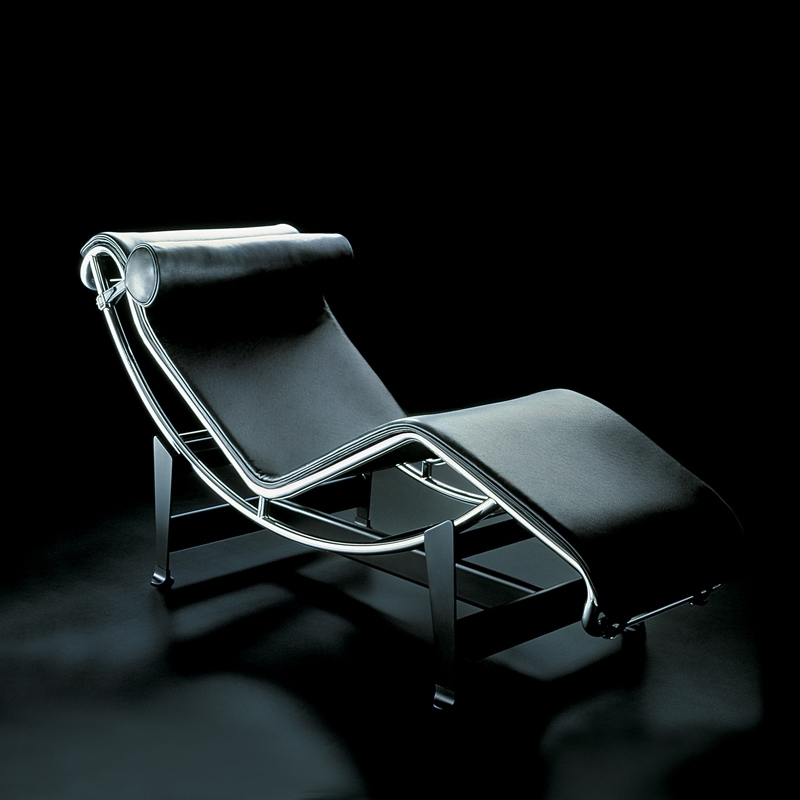
Is the LC4 chaise longue a creation by Le Corbusier?
Its history is not what one might initially think. The creation of this LC4 chaise longue is indeed attributed to Charles-Édouard Jeanneret-Gris, better known by the pseudonym “Le Corbusier,” a famous Swiss architect, naturalized French, who left his mark on many cities, such as the Cité Radieuse in Marseille. And yes, if you thought Le Corbusier was his surname, you were wrong! Charles-Édouard Jeanneret-Gris decided very early on to use this pseudonym to sign all his work, in reference to one of his maternal ancestors, and more particularly his great-grandmother Caroline Le Corbésier. But ultimately, he was not the sole originator of this chaise longue, now named LC4 in the Cassina manufacturer’s catalog.
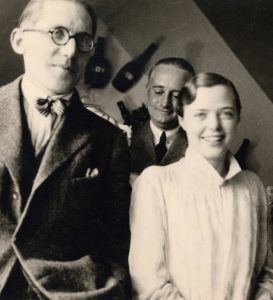 It would indeed be more accurate to attribute the design of this LC4 chaise longue to a trio, composed of Le Corbusier, his cousin Pierre Jeanneret-Gris, and a woman, a rare occurrence for the time in this field, Charlotte Perriand. This designer, also a photographer, had a major impact on interior furniture from the late 1920s onwards.
Trained at EUCAD, the School of the Central Union of Decorative Arts, from which she graduated in 1925, Charlotte Perriand’s work quickly distinguished itself from the Art Deco style of the era. This artistic movement, born in the 1910s, reached its peak in the 1920s when Charlotte Perriand began working, before ending with the arrival of the Second World War.
Although she was completely immersed in this movement through her training, Charlotte Perriand immediately distanced herself from this style after leaving school, breaking the codes of a highly codified environment, primarily based on aesthetics, to propose more functional furniture. For a good cause, this audacity gave her a certain visibility. An audacity she quickly put into practice by presenting her Coin de Salon in 1926, which aimed to create avant-garde interior furniture accessible to the average French person, and which she presented at the Salon des artistes décorateurs the same year. A Coin de Salon that caught the eye of the public and design enthusiasts, who began to follow her work.
During the same period, she created her own design furniture company and set up her workshop in Place Saint-Sulpice in Paris with elements that would become her signature: chrome-plated tubular chairs and metal tables. Far, very far from Art Deco. Charlotte Perriand thus introduced a new impulse, a new movement. An avant-garde she presented at the Salon d’Automne in 1927 with her work titled Le Bar sous le toit, followed by la Salle à Manger de Saint-Sulpice. This reinterpretation of a bar, composed of stools, benches, lighting, and low tables, literally staged in her workshop, under the roofs in an attic environment, highlighted strong materials: tubes, sheet metal, chrome, leather… Doesn’t this remind you of the design of the LC4 chaise longue?
Her work caught the eye of a famous architect of the time, recognized worldwide, Le Corbusier, who himself was criticized by his peers for proposing work that was a little too avant-garde. These two personalities were destined to meet and, above all, to collaborate. It was even obvious to Le Corbusier, who, after visiting Charlotte Perriand’s workshop, realized that part of her work on seating furniture corresponded to sketches he had made himself to furnish his own buildings. It was thus naturally that Le Corbusier invited Charlotte Perriand to join him as an associate.
And among the first works created together, Charlotte Perriand worked on so-called rest chairs, drawing inspiration notably from Doctor Pascaud’s Surrepos armchair, created in 1920, a reclining chair designed for therapeutic purposes.
Then, Charlotte Perriand drew inspiration from the Thonet brand’s rocking chair and its rocking principle – a pioneer in the industrial production of tubular steel furniture – which would inspire Charlotte Perriand for her rocking chair project. After various trials, the chaise longue was unveiled in 1928, when it was first exhibited in the library on the 1st floor of the Church villa pavilion, named after a couple, Henry and Barbara, who entrusted the restoration of their property to Le Corbusier. But it was the following year, in 1929, at the Salon d’Automne, that the chaise longue caused a sensation, exhibited as part of a complete set of highly modern home furnishings.
The Success of the LC4 Chaise Longue
Following the critical acclaim received at the Salon d’Automne, the team decided to launch the commercialization of this chaise longue, which did not yet officially have a name. Lacking knowledge of mass furniture production, the trio decided to trust Thonet for all their furniture. This association did not prove to be a success; only 172 units were produced before the model’s commercialization ceased in 1937. The 1929 crisis and the product’s price are cited as reasons for this commercial failure.
But Le Corbusier did not abandon this chaise longue, convinced of its potential commercial success. He reissued it under his sole name in 1959. However, it was not until 1964, one year before Le Corbusier’s passing, that the Italian firm Cassina, under the direction of Charlotte Perriand, decided to reissue all the furniture conceived by the trio years earlier, including the famous chaise longue, which would henceforth bear the name LC4 Chaise Longue. With the success it is known for today, to the point of becoming an icon of design furniture.
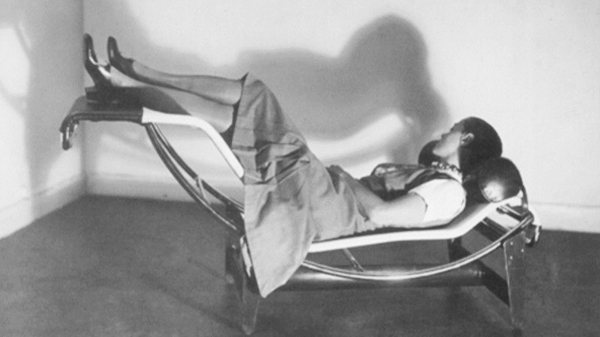
With this new name, the LC4 Chaise Longue, Charlotte’s work thus disappeared. But it would reappear a few years later, in 2011, with the release of the Tokyo Chaise Longue, a variation of the chaise longue available in bamboo, beech, and teak, created in 1940 by Charlotte Perriand following her stay in Japan. A stay that would deeply mark the designer and become an essential source of inspiration.
Dimensions of Le Corbusier’s LC4 Chaise Longue
Length: 160cm
Width: 56.4cm
Jbonet is an official distributor of Le Corbusier’s LC4 chaise longue. Would you like more information? Our teams are available in our showrooms to advise you.